
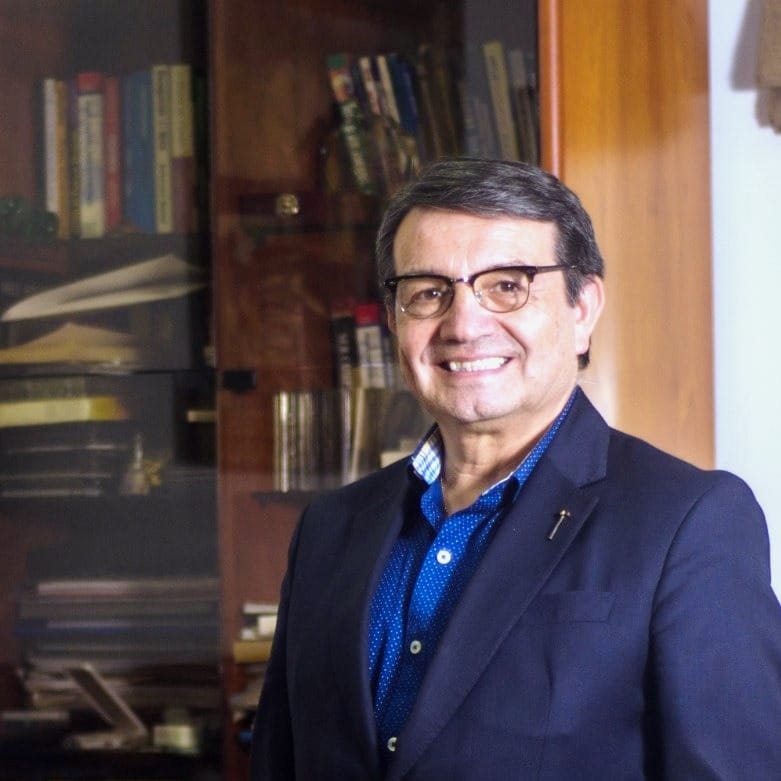
- Dr. Manuel Viera Flores, CEO of Metaproject and President of the Chilean Chamber of Mining
Following the recent events in the Andesita sector of the world's largest underground mine, El Teniente, operated by Codelco Chile, where six miners tragically lost their lives as a result of a random phenomenon known as “rock bursting,” we need to take a closer look at this geomechanical phenomenon. This is a natural event that Chile must become accustomed to as underground mining in hard rock deepens. Its origin, among other hypotheses, is generated by the unstable release of potential energy from the rock surrounding the excavations, inherent to changes in the depths of the mountain. We must not forget that this occurs 1,200 meters below the surface.
However, we must learn lessons so that there are never again losses of human life or material damage. The causes and origins of the event must be investigated by a multidisciplinary team of experts in order to apply new knowledge of the phenomenon and prevent or, at least, mitigate its magnitude. In underground mining, mining operations simply trigger seismic events that are mainly derived from the deformation energy produced by geological differences in stress states. A rock burst is defined as the sudden and violent detachment of large blocks of rock as a result of the high pressures exerted on the contour of an excavation. We must learn from the past and secure the present. We have to design and plan for the future with safety in mind.
In my opinion, the challenge of safety in mining should focus on these broad areas:
- Create an institute for scientific research into mining accidents.
- Safety is approached with a proactive prevention mindset where “life comes first.”
- Apply the widespread use of digital technology 4.0 for prevention
- Modernize and update mining safety regulations, applying the technique of“Neuropsychosocial risk”
- Modernize state institutions. Sernageomin is key.
- Clean production and zero fatality approach
- Having a high-level specialized mining rescue team, dependent on Sernageomin and financed, in part, with royalty funds.
What are the key issues and challenges Chile must address in terms of security in the future?
- First strategic focus: Creation of an accident investigation institute using scientific methods
This would put Chile at the forefront of research into phenomena such as rock bursts. With forensic geology and engineering, we can generate new knowledge for the design of deep mines. With a mine rescue team, in the event of entrapment due to cave-ins, it is possible to investigate the quality and behavior of rocks, among other matters.Accident investigation committees, such as the one set up after the accident at El Teniente, must be multidisciplinary, transparent, and free of bias. This is how we can identify the causes, the root causes, and the truth.
- Second focus Proactive prevention: Life comes first
“Nothing is more important than human life, not production or business profitability.”. From there, strict rules, regulations, and procedures can be applied to protect human life, physical property, and the environment, among other things.
Mining safety should not be limited to reacting to new accidents, such as the rock burst, but should focus on identifying and mitigating risks before they occur, based on the scientific method. This involves conducting comprehensive risk assessments, implementing preventive measures based on data science, and fostering a culture of safety where each worker feels responsible for their own safety and that of their colleagues. Some measures that can be applied include, among others:
- Apply the concept of “neuropsychosocial risk” as a new way to promote care and prevention of workplace accidents, where safe conditions are the responsibility of mining engineering, and safe behavior is the responsibility of occupational psychology and neuroscience, which controls emotions, thoughts, behaviors, and basic bodily functions.
- Apply fortification systems or supports that absorb energy and deform without breaking. Even when these systems are damaged, they tend to limit landslides, preventing fatalities.
- Apply controlled stress relief blasting to reduce the risk of rock bursts, particularly in fragile rocks subjected to high stresses. Also, redesign the unit operations of the extraction process, based on geomechanical and safety criteria.
- Try to ensure that the areas exploited are filled in, and that the filling is carried out simultaneously with the extraction, as well as being kept as close as possible to the front.
- Carefully plan mining designs and plans, maximizing the safety and reliability of the production system with zero fatalities. Caving methods have been quite successful worldwide due to their productivity, low costs, and the depth of the deposits, which causes the transfer from an open pit mine (open area) to an underground mine.
However, there are still a number of challenges related to the following:
- Forced caving or panel caving.
- Pre-conditioning.
- Initial scour depth.
- Fragmentación.
- Seismic activity and collapses in competent rock.
- Extraction control.
- Sinking rate and open area
To control all major risks, the magnitude of which causes catastrophes in mines, the causes must always be investigated using scientific methods, forensic geology, and forensic mining, in order to ensure safe and reliable working conditions.
Forensic mining engineering emerged worldwide with the need to analyze causes and effects for the prevention and management of problems arising from various natural and anthropogenic risks. Forensic engineering uses advanced methodologies to assess landslides and structural or geomechanical collapses of rock masses. This includes the use of emerging technologies, such as drones and remote sensors for damage assessment and emergency response, as well as artificial intelligence.
- Focus on the widespread use of digital technology 4.0
The implementation and adoption of technologies such as artificial intelligence, robotics, virtual and augmented reality, online monitoring, and AI-enabled sensors can help automate dangerous tasks and operations, improve the accuracy of risk identification, and facilitate worker training and education. Some events are almost unpredictable, so they must be studied using stochastic processes. Even AI-enabled sensors to measure stress and deformation in rock online could help predict rock bursts.
Chile has the best experts in geomechanics and extensive knowledge of rock burst phenomena, so why look elsewhere? Is this a sign of underdevelopment? In fact, experts from around the world frequently travel to Chile to learn about advances in underground mining. We are at the forefront of knowledge in this field.
- Modernize and update mining safety regulations by applying Neuro Psycho Risk.
It must be modernized using current digital equipment, online monitoring, artificial intelligence, and, above all, accident investigation using scientific methods and forensic engineering. Safe and unsafe conditions must be studied by multidisciplinary engineering. Safe and unsafe behaviors must be studied by industrial psychology and neuroscience in order to learn how to control emotions and behaviors.
- Modernizing state institutions, Sernageomin is key
Sernageomin plays a key role in mining safety, and to this end, its organizational structure must be modernized in all the functions it performs. Perhaps the Mining Accident Investigation Institute, together with the Rescue Team, should be under its jurisdiction.
- Clean production and zero fatality approach
Chilean mining must apply the modern approach of Planetary Mining, that is, unrestricted respect for nature, the environment, and the living beings that inhabit it, avoiding pollution and always prioritizing life over production.
- Having a highly specialized mining rescue team
In Chile, after the rescue of the 33 miners from the San José mine, many promises were made that never came to fruition. Chilean mining must have a high-level rescue team for emergencies, such as trapped miners, fires, or flooding of production areas. The Chilean Mining Chamber has a project to create this team, which is seeking funding for its existence, perhaps under the auspices of Sernageomin.
You must conduct a forensic analysis. In other words, a comprehensive analysis of the project's background, previous studies (geotechnical, geological, conditions, and structural), quality control, and legal and economic aspects must be carried out. This allows responsibilities to be determined and technical solutions to be proposed to prevent future accidents.
In summary, Chile must adapt to new realities based on safety in order to remain the world leader in mining. In other words, safer and more reliable engineering projects are required. An accident such as the one that occurred at El Teniente not only causes human losses but also monetary losses. If operations were halted for 10 days, nearly US$100 million would have been lost, but production at El Teniente will not return to normal levels until the forensic investigation is complete and the official causes of the accident are known.
Perhaps rock bursts are a black swan event? There are unpredictable events, such as rock bursts, earthquakes, and environments with dangerous concentrations of dust and gases in the atmosphere, but progress is being made in tunnels with remote-controlled or autonomous transport equipment. There are also good safety regulations that need to be modernized in line with the times, applying artificial intelligence and forensic audits. Complying with mining safety regulations in Chile is another focus to consider.
It should be noted that mining presents certain risks that are difficult to predict and others that can be predicted. I believe that progress should be made in developing modern regulations, applying scientific methods and forensic engineering to investigate the causes of fatal accidents and frequent accidents. To this end, the implementation of artificial intelligence, robotization, automation, and online monitoring of the vital signs of each worker, whether they are employees or contractors, should be accelerated in order to know their exact location in the event of a collapse or entrapment.
It would be nice to say: Chile, the world's leading copper producer with zero fatalities in its mines! That is the challenge.